Category Archives: Uncategorized

Interfaith at Oasis

I have been asked to contribute an article to the Uniting Church’s national Relations with Other Faiths monthly news. We decided to pick up on one of the themes for my presentation to the national Spiritual Care Australia Conference in Hobart on April 21 and to the University of Tasmania the following day – the progression from mono- to multi- to inter-.

Australian universities have become places of increased religious diversity. In 2012, one in three students studying in Australia were international students, adding to the mix of faiths on campuses across the nation. With this changing landscape, university chaplains have been forced to reassess how they meet the spiritual needs of students.

The Uniting Church first appointed Geoff Boyce as chaplain to Flinders University in 1997. He steered the evolution of the University’s chaplaincy and the Religious Centre to become the Oasis Centre – a space for hospitality, well-being and inclusive spirituality.

This week Geoff is speaking at the Spiritual Care Australia National Conference in Hobart for chaplains about what he’s been doing at Oasis and the journey from a multi-faith to an interfaith conception of chaplaincy.

He writes:

“I’m often asked, ‘what does a chaplain do?’, ‘What exactly is Oasis?’

“I wish I had some neat answers! It’s a complex story rather than a ten second sound-bite!

Chaplaincy evolved out of the church’s need to provide religious services to those geographically displaced from their local church – those in hospitals, prisons and armed services, for example. There is little need in today’s universities because most religious needs can be met in the local community. The days of traditional ‘looking after our own’, sectarian chaplaincy in secular higher education institutions are numbered. Such chaplaincy is of little consequence to a modern university.

At Flinders the changed role for chaplaincy emerged from the internationalisation of the university. Harmony on a pluralist campus requires attention to social cohesion in the face of difference. This attention to the quality of relationships, a concern also quite central to religions, broadened the scope of an inclusive multi-faith chaplaincy to attend to the whole campus – pastoral care to all, regardless of faith or no faith.

So the next step for us at Flinders had to go beyond multi-faith in a Religious Centre – chaplains of the different faiths offering pastoral care to their own. Multifaith (literally many faiths) is an essential first step beyond religious sectarianism, but it doesn’t have the capacity in itself to deliver the harmony we need in our pluralist context. Not that there isn’t a lot of work to be done in that first step of recognising and respecting the rights of others to their belief systems!

Interfaith (literally, between faiths), focuses on the quality of relationships between people of diverse faiths, and also those of no particular faith practice. In Uniting Church language, it is a kind of ‘Ministry of Reconciliation’. It aims to be an inclusive, whole of university, pastoral contribution to university life.

The creation of an Oasis Team has been at the heart of the Oasis interfaith initiative. The team comprises appropriate representatives appointed by religious communities as well as other volunteers who subscribe to the pastoral vision of Oasis and its disciplines. Some of these are members of staff and others, retired members of staff. The team models what we are on about in its own team-life, and offers that ‘inter-life’ to students and staff.

It was surprising at the time, but looking back, I can see that it was not such a big step for a progressive university, at a time of restructuring student services in 2012, to embrace Oasis within its administrative structures, to appoint staff to sustain it and provide a modest budget for its activities. We had always strived to be of service to the university as well as our own constituencies. But we had not expected this!

‘Secular’ in our context does not mean a-religious, anti-God or athieistic. We at Oasis claim the meaning of ‘secular’ as understaood at the time Adelaide, the ‘City of Churches’, was first established – that no one religion be privileged over another or be used to exclude others. The ‘secular’ was a means of protecting freedom of religion, critical in the lives of the various groups escaping religious oppression in the UK and Europe at the time, and providing a means for peaceful and prosperous life in the new utopian colony.

In an ideal world, all university staff would be pastoral carers, customising every situation and conversation to individual students – students who come from highly diverse cultural, national, religious and academic backgrounds. But the pressures in the modern university are often forbidding.

Oasis is founded on what has been learnt in its evolution: from sectarian, often protective and individualised; to a ‘community of colleagues’, a multifaith chaplaincy with a broader agenda of respect for diversity; to an open, intercultural and interfaith enterprise fostering a culture of care.

The challenges of religious and cultural pluralism require major shifts in thinking for chaplains – no longer the ‘rescuing’, ‘telling’ salvation paradigm, but the hospitable, listening, empowering and long-term-committed mentoring (‘walking beside you’) paradigm, directed toward individual and corporate well being.

It means being closely connected to the life of the university but not meddling in it with hidden religious agendas, it means working collaboratively, connecting the disconnected, doing what needs to be done without taking over, enriching and enabling.

Arguably our longest-running collaboration has been with International Student Services. Some years ago they shared with us a concern about the spouses of international students and their families, often isolated in their flats while the students, often the husbands, were on campus. Responding to this directly was outside the ambit of International Student Services. So we agreed to co-host an English Conversation Class for the spouses each week. While the draw card was English language, our real concern was to reduce the isolation of families and build an ongoing community of support. But it also worked the other way, as hospitality is wont. Our Oasis Team member was inspired to undertake a degree in Indonesian. Now her fluency in Indonesian has opened the way for deeper collaboration with the International Office in building friendly relations with Indonesia through our Indonesian alumni.

At the same time, students who have experienced the unconditional hospitality of Oasis at Flinders return to their home countries as Oasis Ambassadors to affect greater interfaith understanding in their home communities.

The opportunities for good are endless!

Anatomy Memorial Service

For the last seventeen years, at the start of each academic year, the three universities in Adelaide conduct a combined memorial service for the families and friends of those who have bequeathed their bodies to medical science in the presence of the new medical students – medicine, physiotherapy, dentistry et al.

There is a welcome address by the host Vice Chancellor, an address by one of the Professors of Anatomy, and four reflections by graduate students from the different universities in different fields.

Then three university chaplains, at least one from a non-Christian tradition, address in turn, the families and friends, the students, and an aspect of faith that relates to the occasion, such as grief, science and religion etc. This year it fell to me to take this last slot and I decided to address the university itself, represented by the Vice Chancellor and staff.

Family and friends of donors, students, Vice Chancellor, staff and colleagues:

My name is Geoff Boyce. I am the Oasis Coordinating Chaplain at Flinders University.
Oasis is a university centre for hospitality, well being and inclusive spirituality, aiming to inspire a culture of care.

This afternoon, we turn aside from our daily challenges to focus on this moment. For me, this ceremony brings hope. Hope arising from the generosity of the donors; a generosity that induces deep respect and nurtures our human capacity for empathy.

Someone once said that nothing can be truly given unless there is someone who can truly receive.

So as my contribution to this ceremony, I wish to address my thoughts to the universities themselves, as the receivers of the generosity of the donors and their families, to acknowledge their continuing tradition of both contributing to the advancement of knowledge, as well as its transmission to students and the wider community.

As the result of the generosity of donors, the university is enabled to further its research, leading to greater medical understanding. Students benefit through enhanced learning experiences; and the wider community ultimately benefits from enhanced medical knowledge, and proficient medical care by those graduates, who, in the future, will take our lives in their hands.

In paying respect to the university, I think we should acknowledge the many difficulties and frustrations universities face in sustaining their tradition: the many diversions imposed on them to survive, such as the interminable search for funding, the pressures of external political ideology, and the need to construct self-protective mechanisms in the face of uncertain threats, to name a few. Dare I mention arranging enough car parks?

In fact, these diversions are no longer considered diversions, they have become normalized as essential to the survival of the university.

I think most of us recognize similar challenges in our own lives. But the demands on such large and complex human institutions are particularly exacting.

From where I stand as a university employee, I believe that one of today’s great challenges for the university, given the many pressures that frustrate its endeavour, is the protection of the space needed to nurture the spirituality of its members; to resist being over-run by a dominant utilitarian, risk-averse and consumerist culture, that inevitably leads to a toxic self-interest, blind to compassion and destroying trust and hope among its members and the wider community.

There is a writing in the Christian tradition, often repeated at marriage services: “now these three abide…” (that is, these three qualities are foundational and timeless) – “these three abide – faith, hope and love – but the greatest of these is love”. By ‘love’ I understand the writer to mean, empathetic acts of sacrificial compassion. Such acts require space for their enactment.

Faith, hope and love are what the donors have expressed, and I dare say the families expect of the university.

I commend the three universities for providing this opportunity today, for expressing their commitment to human dignity, and for providing the hospitality that allows us to express care for each other, in the context of the pursuit of knowledge and compassionate service to humanity.

Thank you.

Comments on Agile, Scrum and Lean

From my mentor son in London…
Some thoughts…
Your part about the short turnaround times in Agile actually alludes to concepts in Lean. In Agile the short cycles are based on the idea that planning the scope of a job upfront is destined to fail because that is the time you know the least about what you’re doing. There is a key concept in this approach called “failing fast”. That is to say we need to have methods of finding out when our assumptions are false, and to iterate or abandon. Ideas are cheap in this world, because they are only considered to be the starting points for new directions, rather than “THE IDEA” as a spec that can be implemented and assumed to succeed. As such, there is a general feeling that ideas should be shared rather than protected.
I’m “reading” (audiobook) a book by the founder of Pixar at the moment called Creativity Inc. Some of it would be of great interest to you. One of them is that they have what they call “the Brain Trust”. Within a film production, the director has complete control, but there are often (every quarter or so) screenings of progress to “the Brain Trust” (essentially the elders within the company) where they provide candid (he prefers this to “honest”) feedback to the director. The key part of this is that the Brain Trust can’t tell the director what to do. Their job is to identify problems and suggest solutions, but the true solution is up to the director.
The role of the Product Owner is to be the champion of the customer. In Agile parlance, the “customer” is whoever is going to be using the product. In your case the product is Oasis.
My understanding is that The Scrum Master is essentially a powerless facilitator whose role is to protect the self-organised team, clear blockages and convey information to the development team. They can’t tell anyone what to do.
“command and control” – there is quite a lot of talk of “ask for forgiveness, not permission”, and “bias to action” in the company cultures in the tech sector. That is to say, if the workers are smart people aligned to a broader vision, they should be empowered to make decisions without explicit permission.
Retrospectives – there is a part of Scrum that I think you would really find valuable. At the end of each iteration the team holds a special session where they talk about how things went. Some teams use this as a time to thank their colleagues for help. The focus is improving the process – what could we have done better; which parts of our processes are useful and which parts are wasteful. In this way, every team ends up running their own flavour of Agile as they sculpt the process to match their needs. This is one part of the process that we don’t do, but I would very much like to.
I really enjoy this stuff, and will be excited to see how you get on implementing it within your team. I think the key for you will be getting buy-in from all involved, and introducing the ideas gradually.

Conversation

One of my good friends and colleagues, Andrew Wilson, at Imperial College in London, has recently written a couple of blog entries I have found helpful to think about side by side.

His most recent post is an article he wrote for  ‘Kalyana Mitra’ – the newsletter of The Buddhist Chaplaincy Support Group – entitled, ‘Caring for others through Spiritual Friendship’.

In it he lays out four strands within Chaplaincy at Imperial:

In the Chaplaincy Multi-Faith Centre at Imperial we have four key areas to our work. The first is the multi-faith approach – using the Centre as a place where students of different faiths can practice their religion.
The second area is pastoral care. Sometimes this relates to a person’s religious life, but often it does not. The third area is interfaith – promoting better understanding and co-operation between people from different religious groups. The fourth area is offering opportunities to reflect on meanings and values arising from studies or work. For example, supporting medical ethics teaching, facilitating staff and students to share together their motivations and inspiration as civil engineers, or reflecting with animal care technicians about the stresses of their work in bio-medical research. In reality these four key areas all overlap!

He also delineates two kinds of chaplaincy at Imperial – that which is primarily focused on the nurture of particular religious groups and that which has a university-wide ambit that embraces all four of the key areas of work mentioned above. This latter chaplaincy may be funded by the University, whereas the former is dependent on voluntary participation by members of external religious communities – and included within the program of the Chaplaincy Centre.

At Oasis, we would probably say that the first kind of ‘chaplaincy’ might fall within the province of Student Clubs and Societies. Just like the Soccer Club might appoint an external coach, a religious club might appoint an external ‘coach’.

The second kind – wider ‘chaplaincy to the University’ – would be the province of the Oasis Team, supported by Oasis staff appointed by the University, with facilities provided by the University to support this wider mission of ‘inspiring hospitality and wellbeing’, a mission derived from the mission of the University and accepted by it. And, like at Imperial, Flinders religious clubs and societies may (or may not choose to) use Oasis facilities.

The second post is an article for the student newspaper, designed to communicate to students the nature and purpose of the Chaplaincy at Imperial. In it he identifies ‘conversation’ as its universal characteristic and suggests that while such conversations are open, the more obvious themes might be expected to focus on religious needs, inter-religious understanding, values and ethics within a context of mutual relationship.

By privileging Nouwen’s concept of hospitality, Oasis has created an ethical framework for ‘conversation’; and by privileging interfaith, Oasis has prioritised supporting relationships of respect and understanding between people of difference. At Oasis, the literature of ‘Interfaith Dialogue’ informs how ‘conversation’ may best occur (eg the widely accepted ‘Dialogue Decalogue’).

Commitment to the ethics of hospitality and principles of dialogue are essential to the effective functioning of an Oasis open for meaningful ‘conversation’.

The question arises as to how these ethics and principles are normalised, at least as an ethos within Oasis, when some religious clubs and societies, who access the facilties, may have other conflicting agendas?

I suspect there is no easy answer. Wherever we look internationally, there is no easy answer. The European Union, which has achieved unprecedented peace in Western Europe for the last 69 years, may provide clues, but it is struggling to hold. The Middle-East is a basket case, as is much of Africa. The United Nations does its best, but is often powerless. The question I started with, when I first stepped on to the Flinders campus seventeen years ago, remains – ‘how are we going to live together in this globalised world?’.

It will require ‘conversation’!

MoTiv in Adelaide, July 17 – 19, 2014

MoTiv in Adelaide

For more than 20 years MoTiv, a consultancy working at Delft Technical University in the Netherlands, has been contributing successfully as professionals in the public sphere.

As their name suggests, the heart of their enterprise is the fostering of conditions conducive to motivation, the imagination and the creative process.

Yet they defy neat categorisation. They are trainers and coaches – in the university and in the business world. They are film producers – creating documentaries as resources for developing understanding in the places where they are engaged. They are theologians – exploring the expression of spirituality in the secular workplace. And they are chaplains – offering a listening hospitality, empowering professional people seeking to explore the wider values and meanings of their work.

An article giving some of the critical history of the Delft Technical University’s chaplains’ thirty year transformation into MoTiv – technology and spirituality may be found here:
https://travellingchaplain.com/wp-content/uploads/2013/07/the-steps-of-motiv.pdf

ADELAIDE SCHEDULE

Thursday July 17

2.30 to 4.00 pm

Chaplaincy Services South Australia
Board and Senior Chaplains
Seminar- Discussion: Introduction and Business Model
Naval, Military & Air Force Club, 111 Hutt Street, Adelaide (Long Tan Room).
Convenor: Craig Bossie: <hc4@picknowl.com.au> Mob: 0410604876

5.00 to 9pm

Flinders Criminal Justice Students Association, (CJSA)
“Night of the Philosophy” Student-Staff Dinner

‘The Abbey’, University Hall.
5.00 Pre-dinner drinks. CJSA Committee and MoTiv
5.30 Continue Pre-dinner drinks – CJSA Committee, MoTiv and guests
6.30 Dinner
Convenor: Flinders Criminal Justice Students Association <flinders.cjsa@gmail.com>

Friday 18 July

10:00 to 12:00 

Flinders staff and Student Leaders
Forum: Inspiraton, Motivation, Imagination – Models of Engagement,
Oasis Common Room

 From 10 to 11am: Fostering a Student Experience of Wellbeing

 MoTiv will share their ideas and experience of working with the student leadership at Delft Technical University over the last twenty years, and members of the Flinders Criminal Justice Student Association will give feedback from their experience of a “Night of the Philosophy” with MoTiv from the previous evening.

11.00 to 11.20 Tea and Coffee Break

From 11.20 to 12.10: Documentary Film – a strategy for building understanding between students and teaching staff.

 Students and staff are welcome to attend either or both of these sessions or to simply drop in for morning tea or lunch.
A light lunch will be provided at 12.30 for those who would like to continue informal discussion with MoTiv.

3.30 to 5.00pm

Public Lecture and Discussion:
‘Spirituality in the Secular Institution’
a conversation for anyone concerned with wellbeing in the workplace
Chaired by former Premier of SA and former CEO of Anglicare, Lynn Arnold
Flinders University, Victoria Square Campus, Level 1
The lecture is free but seats are limited.
Please register: oasis@flinders.edu.au

Convenor: Hanim: hanimuni12@gmail.com, 0470 577 501 

Saturday 19 July

 10 to 12

Open House, Open Conversation
An opportunity for anyone who wants to follow up conversations with MoTiv
Convenor: Geoff Boyce, mob: 0413 153 616

6.30 to 9.00 pm

Dinner
Adelaide University Chaplains
(Oasis Team , Adelaide and UniSA chaplains and support teams)
Goodwood Park Hotel,
Goodwood Road, Goodwood.
Convenor and rsvp, Geoff:  0413 153 616

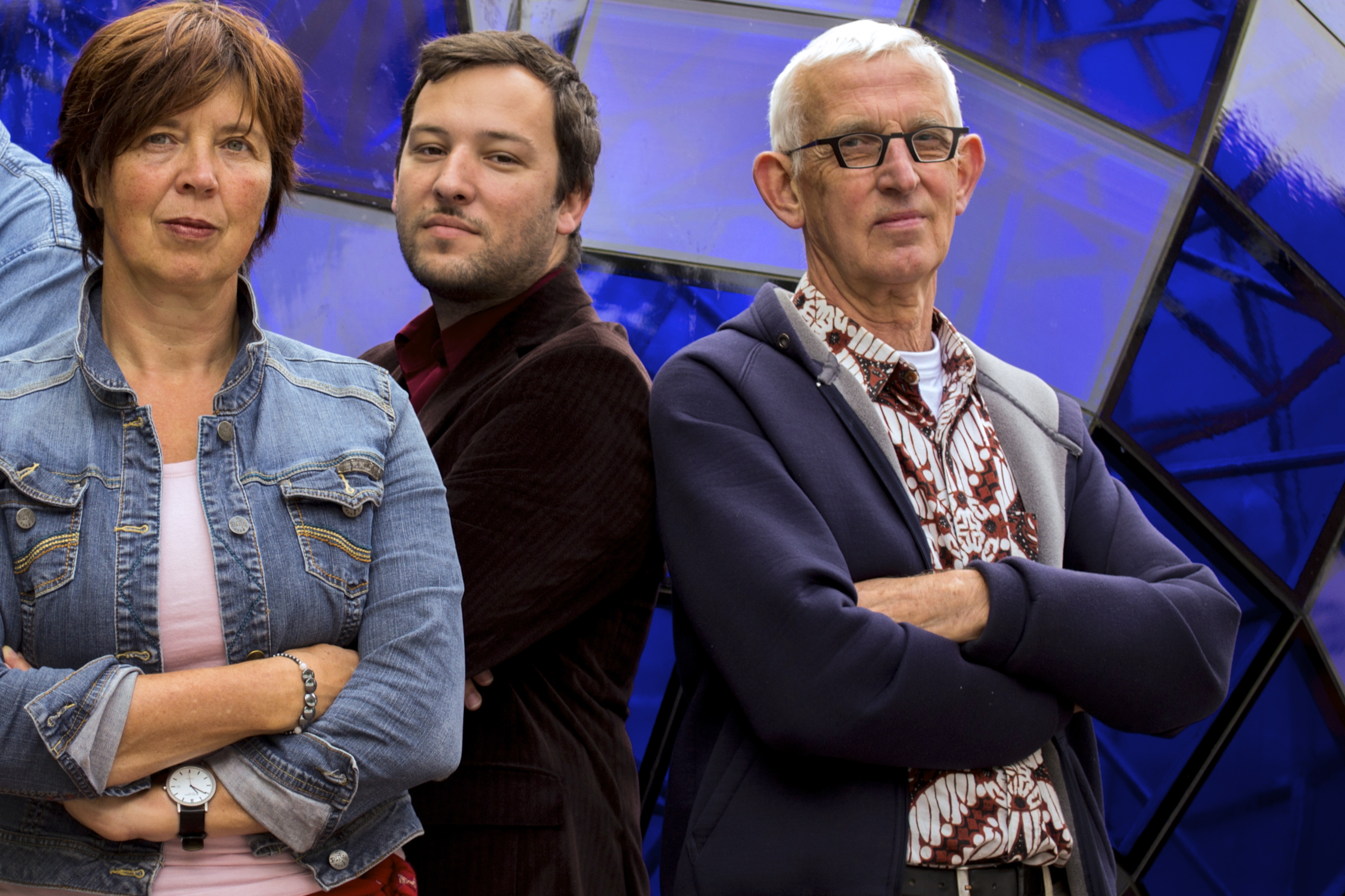
The MoTiv Team  in Australia

Ton
Ton Meijknecht MA, M.Div, PhD

Ton Meijknecht (Nijmegen, 1944) studied theology and history at the Catholic University Nijmegen, Amsterdam (Kath.Theol. Hogeschool). His research was awarded a Ph.D at Leiden University. He has been working as a university chaplain at the Delft University of Technology since 1974. His subject is the development of language and the importance of expression. His latest research on professional spirituality is published in Implicit Religion (2014).

Oldenboom
Renske Oldenboom MA, M.Div

Renske Oldenboom (Koog aan de Zaan, 1957) studied theology, ethics and sociology at the Theological Faculty of the Vrije Universiteit in Amsterdam and has been working as a university chaplain in Delft since 1996. She specializes in communication skills and talent development. Recently she obtained an advanced diploma in training & coaching at Haagse Hogeschool.  At MoTiv Renske organizes numerous courses on ‘living with a loss’. Renske is an ordained minister in the Protestantse Kerk in the Netherlands.

Sturms
Günther Sturms STB, STL, BA (Music), MA, M.Div.

Günther Sturms (Hulst, 1979) studied musicology (BA) at Utrecht University and religious studies and theology at the Catholic universities of Leuven and Nijmegen universities, Radboud University, Nijmegen and the Pontifical University of Ireland, Maynooth. He obtained an STL-degree in liturgical studies at Radboud University Nijmegen. Since the fall of 2009 he has been working as a university chaplain for the Roman Catholic diocese of Rotterdam.
Günther is also secretary of the European Conference of University Chaplains (CEUC) and executive board member of the International Association of Chaplains in Higher Education (IACHE).

Recent University Engagement

From the Imperial College Website: http://www3.imperial.ac.uk/edudev/networksandevents/perspectives/motiv

In November 2013, MoTiv were invited to Imperial College, London where they made a presentation Perspectives in Education, ‘Inspiring student leadership and team work: Expanding the horizon of the curriculum and enhancing the student experience’.


Reflections on a discussion about Oasis and the proposed Student Hub

Last Sunday, I attended the induction of Rev Dave Williamson as chaplain to Adelaide University and UniSA. In a casual conversation I was told that a copy of my book “An Improbable Feast” was presented to the Vice Chancellor of Adelaide University as the foundational document for Dave’s chaplaincy.

While this might be flattering, the book was not written with Vice Chancellors in mind. It reads as the story of how Oasis emerged from conflict, how we discovered hospitality as the central theme that enabled us, chaplains from diverse faiths, to work together. At the time of writing, my ‘first -read’ editor, Norm Habel, suggested I write a chapter with the university in mind. I decided against it; but I knew that eventually I would need to put together another book about Oasis that might be useful for those who might want to implement the principles woven into the Oasis narrative.

So when Carolyn Davidson, Director,Strategic Project Delivery asked Oasis to describe to her what it does and how it does it, I thought I should make a start, sketching out some of the bare bones that might later be fleshed out into a sequel to ‘An Improbable Feast’.

It may be found as Oasis and the Student Hub in Resources.

I welcome comments and suggestions.

Oasis and the Wider Community

Today Kylie Davis, our Pagan Chaplain articulated what I think is an excellent framework to help us work through how Oasis might initially respond to requests from the wider community.

The principles are:

  • Telling: members of the Oasis Team share their experiences about being involved in Oasis in the context of the expressed needs of the audience.
    Eg the Oasis Team have shared their experiences at national and local conferences of chaplains interested in interfaith relations.
  • Hosting: workshops hosted by Oasis involving active participation by the participants on the themes of interfaith ceremonies, celebrations and rituals and how they may be constructed inclusively.
  • Doing: create and enact a public ritual in which people participate. A learning experience and a resource for future use, development or adaption.
    Eg the Multifaith Australia Day Celebration, Opening rituals of Oasis Celebrations at Flinders.

These principles expand on the existing practice of Oasis, as an encouraging host to individuals or groups who may want to use the Oasis Facilities, in keeping with the ethos of Oasis. In this way the mission of Oasis is multiplied by others.

Hospitality Skills Development

In my book ‘An Improbable Feast’ I explored how hospitality became the unifying and informing practice of Oasis.

An understanding of hospitality informs every aspect of the relationship of Oasis with the University, the wider community, the use of the Oasis itself as a centre, how conversations and relationships are initiated by members of the Oasis team with students and staff, and also within the team itself, and how discernment is exercised among those seeking support at Oasis.

Oasis fosters health and well-being by informal, social means through the practice of hospitality, complementing the University’s Health and Counselling Service which fosters health and well-being by formal means through the practice of therapeutic intervention.

In the development of Oasis this year, the Oasis team has identified elements within the process of offering hospitality.
https://travellingchaplain.com/resources/

Now the question arises, how might the skills needed to accomplish each of these elements be developed and sharpened?

I suggest for discussion:

1. The motivation and attitude of the team member
The voluntary nature of the Oasis enterprise assures that team members are more likely than not to be motivated toward contributing to the achievement of the vision of Oasis in an attitude of service. However, the question of whose needs are being met and how, requires constant interrogation.

2. Information and practice
The directions and fortunes of the university contextualize Oasis.
Fundamental changes challenge the whole university enterprise. For example: http://www.abc.net.au/radionational/programs/ockhamsrazor/the-changing-face-of-university-education/5011596#transcript

If the prophet above is anywhere near the mark, and I suspect he is, and universities become less and less places people go to get information in order to buy credentials for employment then the role of an Oasis on campus becomes called into question; and credentialing pastoral care through traditional processes may also need to be reconsidered within this conversation.

It would be possible, for example, for Oasis to create a MOOC in pastoral care aimed at a national constituency in the first instance, to provide information and quizzes that generate cognitive understanding. Responsive learning, through conversation, might take place face-to-face in regional centres, and those with the wisdom go to them to provide foci for encouragement and practice. These encounters might create small communities of ongoing reflective learning and support.
The role of credentialing might become the concern of professional bodies in partnership with MOOC providers and the institutions and employers in which such credentialed persons operate.

The Interfaith Role of Oasis

Oasis is a welcoming and enabling community, open to all, contributing to personal and communal spiritual enrichment while promoting mutual respect and appreciative understanding of diverse religious paths and cultural traditions.

Oasis as an Interfaith Centre

The mission of Oasis is to enact and promote the practice of radical hospitality.

Radical hospitality may be described as making space – in which we enter respectfully into each other’s worlds in order to understand appreciatively, whether that space for the other be physical, social, emotional, religious or intellectual.

For members of the Oasis team, radical hospitality is intentionally for the benefit of the other, rather than for the satisfaction of one’s own needs.

Hospitality… means primarily the creation of a free space where the stranger can enter and become a friend instead of an enemy. Hospitality is not to change people, but to offer them space where change can take place. It is not to bring men and women over to our side, but to offer freedom not disturbed by dividing lines. It is not to lead our neighbour into a corner where there are no alternatives left, but to open a wide spectrum of options for choice and commitment. It is not an educated intimidation with good books, good stories and good works, but the liberation of fearful hearts so that words can find roots and bear ample fruit. It is not a method of making our God and our way into the criteria of happiness, but the opportunity to others to find their God and their way. The paradox of hospitality is that it wants to create emptiness, but a friendly emptiness where strangers can enter and discover themselves as created free; free to sing their own songs, speak their own languages, dance their own dances; free also to leave and follow their own vocations. Hospitality is not a subtle invitation to adopt a life style of the host, but the gift of a chance for the guest to find their own.

(Henri Nouwen. Reaching Out: The Three Movements in the Spiritual Life. 1975 Doubleday. New York. p 68)

Interfaith Hospitality

In its practice of interfaith hospitality, Oasis enacts and promotes the principles of:

1. The Faith Friendly Communities Charter:

Principle of Mutual Recognition

A faith friendly community recognises the right of all faiths to meet the needs of their respective members in any given community.

Principle of Mutual Concern

A faith friendly community intends to meet the religious and spiritual needs of its members of various faiths.

Principle of Mutual Understanding

A faith friendly community seeks to understand the values and beliefs of each faith in a given community rather than to pass judgement on them.

Principle of Mutual Respect

A faith friendly community seeks to respect the differences between the values and beliefs of its members.

2. Four basic principles of interfaith dialogue identified by Churches Together in Britain and Ireland (formerly the British Council of Churches):

Dialogue begins when people meet people
Dialogue depends upon removing misunderstanding and building up trust
Dialogue leads to common service within the community
Dialogue is a means of authentic witness


Oasis as an Interfaith Centre

The mission of Oasis is to enact and promote the practice of radical hospitality.

Radical hospitality may be described as making space – in which we enter each other’s worlds in order to understand appreciatively, whether that space for the other be physical, social, emotional, religious or intellectual.

For members of the Oasis team, radical hospitality is intentionally for the benefit of the other, rather than for the satisfaction of one’s own needs.

Hospitality… means primarily the creation of a free space where the stranger can enter and become a friend instead of an enemy. Hospitality is not to change people, but to offer them space where change can take place. It is not to bring men and women over to our side, but to offer freedom not disturbed by dividing lines. It is not to lead our neighbour into a corner where there are no alternatives left, but to open a wide spectrum of options for choice and commitment. It is not an educated intimidation with good books, good stories and good works, but the liberation of fearful hearts so that words can find roots and bear ample fruit. It is not a method of making our God and our way into the criteria of happiness, but the opportunity to others to find their God and their way. The paradox of hospitality is that it wants to create emptiness, but a friendly emptiness where strangers can enter and discover themselves as created free; free to sing their own songs, speak their own languages, dance their own dances; free also to leave and follow their own vocations. Hospitality is not a subtle invitation to adopt a life style of the host, but the gift of a chance for the guest to find their own.

(Henri Nouwen. Reaching Out: The Three Movements in the Spiritual Life. 1975 Doubleday. New York. p 68)

Interfaith Hospitality

In its practice of interfaith hospitality, Oasis enacts and promotes the principles of:

1. The Faith Friendly Communities Charter:

  • Principle of Mutual Recognition
    A faith friendly community recognises the right of all faiths to meet the needs of their respective members in any given community.
  • Principle of Mutual Concern
    A faith friendly community intends to meet the religious and spiritual needs of its members of various faiths.
  • Principle of Mutual Understanding
    A faith friendly community seeks to understand the values and beliefs of each faith in a given community rather than to pass judgement on them.
  • Principle of Mutual Respect
    A faith friendly community seeks to respect the differences between the values and beliefs of its members.

2. Four basic principles of interfaith dialogue identified by Churches Together in Britain and Ireland (formerly the British Council of Churches):

  • Dialogue begins when people meet people
  • Dialogue depends upon removing misunderstanding and building up trust
  • Dialogue leads to common service within the community
  • Dialogue is a means of authentic witness